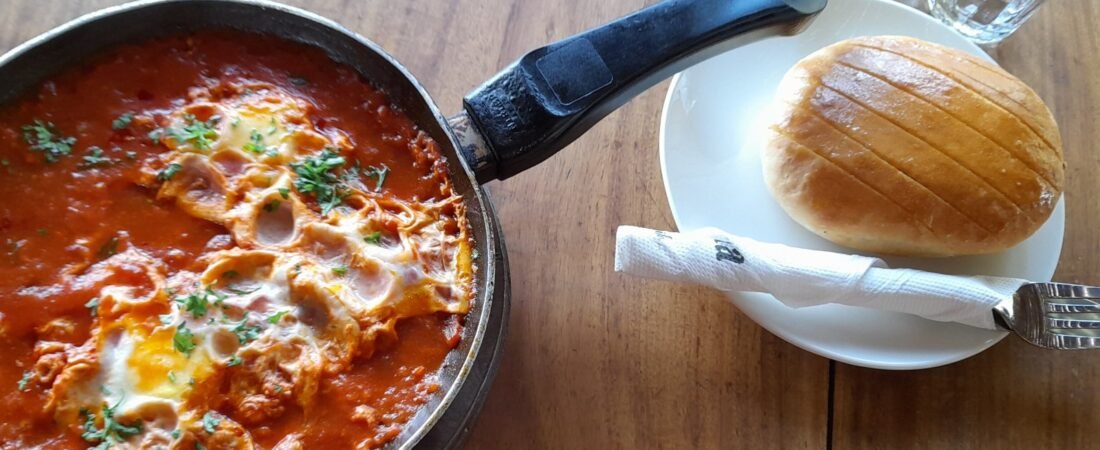
Shakshuka is a one-pan argument for slowing down. The dish is only tomatoes, peppers, spices and eggs, but the difference between a thin, sharp sauce and a deep, jammy one is entirely a matter of how long you are willing to stand at the stove before the eggs go in. Give the peppers fifteen unhurried minutes and the sauce another twenty, and you end up with something worth putting the pan straight on the table for.
It is also the most forgiving recipe in this collection. The sauce keeps for five days, freezes for three months, and the only genuinely time-sensitive part takes eight minutes at the very end.
| Prep time | 15 minutes |
| Cook time | 30 minutes |
| Total time | 45 minutes |
| Serves | 4 generously, or 6 as part of a spread |
| Difficulty | Easy |
| Cuisine | North African and Levantine |
| Diet notes | Vegetarian, gluten-free without the bread, easily vegan |
The three decisions that make it
- Cook the peppers past the point you think they are done. Soft is not the goal; sweet is. That takes twelve to fifteen minutes, not five.
- Bloom the spices in fat, not in liquid. Thirty seconds of cumin and paprika in hot oil releases aromatics that simply will not come out once tomatoes are in the pan.
- Use whole tinned tomatoes and crush them by hand. Pre-chopped tinned tomatoes are treated with calcium chloride so the pieces hold their shape, which is precisely what you do not want in a sauce meant to collapse.
Ingredients
For the sauce
- 3 tbsp olive oil
- 1 large onion, finely diced
- 1 red and 1 yellow bell pepper, deseeded and cut into 1 cm dice
- 4 garlic cloves, thinly sliced
- 1 tsp ground cumin, ideally from seeds toasted and ground that morning
- 2 tsp sweet paprika, or 1 tsp sweet plus 1 tsp smoked
- 1/2 tsp caraway seeds, lightly crushed (traditional, and worth seeking out)
- 1/4 to 1/2 tsp cayenne, or 1 fresh red chilli, sliced
- 1 tbsp tomato paste
- 2 x 400 g tins whole peeled plum tomatoes
- 1 tsp caster sugar
- 1 tsp fine sea salt, plus more to taste
- Black pepper
To finish
- 6 large eggs, at room temperature
- 100 g feta, crumbled (optional)
- A small handful of coriander or flat-leaf parsley, roughly torn
- Extra-virgin olive oil, for drizzling
To serve
- Challah, sourdough or warm flatbread
- Labneh, thick yoghurt or a spoonful of tahini
- Harissa or zhoug, for those who want more heat
Equipment
- A 28-30 cm skillet with a lid, deep enough to hold the sauce and six eggs without crowding. Cast iron holds heat best and goes to the table.
- A lid, a baking tray, or even foil. Something must trap the steam or the egg whites will not set on top.
- A small cup or ramekin for cracking the eggs into. Non-negotiable, for reasons explained below.
Method
- Sweat the onion and peppers. Warm the olive oil in the skillet over medium heat, add the onion and peppers with a pinch of salt, and cook for 12-15 minutes, stirring every couple of minutes. They should be genuinely soft and starting to catch gold at the edges.
- Add the garlic. Stir it through and cook for 1 minute, just until it smells sweet rather than raw.
- Bloom the spices. Add the cumin, paprika, caraway and cayenne and stir constantly for 30-45 seconds. The oil will take on colour and the kitchen will announce what you are making.
- Cook out the tomato paste. Stir it in and keep it moving for a full minute, until it darkens from bright red to brick. This removes the tinny edge.
- Crush the tomatoes into the pan. Squeeze each one through your fingers directly over the skillet, then add the juice from the tins. Swill each tin with 50 ml of water and add that too. Stir in the sugar and salt.
- Simmer, uncovered, for 15-20 minutes. Adjust the heat so it bubbles lazily rather than spits. The sauce is ready when a spoon dragged across the base leaves a trail that closes slowly.
- Taste, and mean it. This is the last moment you can properly season. It should be a shade saltier and sharper than seems comfortable, because the eggs will mute everything. Add salt, a little more sugar if the tomatoes are acidic, or a squeeze of lemon if it tastes flat.
- Make the wells. Use the back of a spoon to press six hollows into the sauce, spaced evenly and pushed right down to the pan.
- Crack each egg into a cup first, then slide it into its well. Cracking directly over a hot pan is how you end up with shell in the sauce and a broken yolk you cannot retrieve.
- Season the eggs with a little salt and pepper, taking care not to break the yolks.
- Cover and cook on low for 6-9 minutes. Six gives you very runny yolks, eight jammy, ten set. Start checking at six: the whites should be opaque and the yolks should still wobble as one piece when you shake the pan.
- Pull it off the heat early. A cast-iron pan carries on cooking for a good two minutes after the flame is out.
- Finish and serve. Scatter over the feta and herbs, drizzle with olive oil, and take the pan to the table with plenty of bread and a spoon for the sauce.
Shakshuka does not wait. Have the bread cut, the table laid and everyone seated before the eggs go in, and the eight minutes that follow will be the only part of the recipe you have to rush.
Troubleshooting
| Sauce is watery | It has not reduced far enough. Simmer uncovered for another 5-10 minutes before adding the eggs; you cannot fix it once they are in. |
| Whites still translucent, yolks already firm | Heat too high and no lid. The lid steams the tops of the whites while the base stays gentle. |
| Tastes flat | Almost always under-salted, or missing acid. Salt first, then try a squeeze of lemon. |
| Tastes harsh or metallic | The tomato paste was not cooked out, or the tomatoes were poor quality. A teaspoon of sugar and five more minutes of simmering will soften it. |
| Eggs slid together into one sheet | The wells were too shallow. Press right down to the base of the pan next time. |
Variations
- Green shakshuka. Replace the tomatoes with 400 g of wilted spinach and chard, a bunch of soft herbs, and 200 ml of stock, blitzed briefly. Finish with lemon and lots of feta.
- Menemen style. Skip the wells. Stir the eggs loosely through the hot sauce so they set in soft curds, Turkish-style, and serve for breakfast.
- With chickpeas. Add a drained 400 g tin along with the tomatoes for a heartier one-pan supper.
- With merguez or chorizo. Brown 200 g of sliced sausage first, remove it, build the sauce in the rendered fat, and return it before the eggs.
- Vegan. Omit the eggs and feta. Nestle in halved soft-boiled-style silken tofu or simply serve the sauce over couscous with a spoon of tahini.
Make-ahead and storage
- The sauce is the make-ahead. It keeps for 5 days covered in the fridge and actually improves on day two.
- Freezing. Freeze the sauce flat in a bag for up to 3 months. Thaw overnight, reheat until bubbling, then add the eggs fresh.
- Reheating with eggs already in it. Do not. The yolks turn grey and grainy. Scoop out any leftover sauce, reheat that alone, and poach fresh eggs.
- Batch note. Double the sauce and freeze half. Weeknight shakshuka then takes twelve minutes from fridge to table.
Nutrition
| Per serving (approx., with feta) | Amount |
|---|---|
| Calories | 330 kcal |
| Protein | 17 g |
| Total fat | 22 g |
| Saturated fat | 7 g |
| Carbohydrates | 16 g |
| Sugars | 10 g |
| Fibre | 4 g |
| Sodium | 780 mg |
Estimated for a quarter of the pan including feta, and excluding bread and yoghurt served alongside.
Frequently asked questions
Where is shakshuka actually from?
Its roots are in the Maghreb, most strongly associated with Tunisia, where the name comes from a word meaning a mixture. It travelled to Israel with North African Jewish communities in the mid-twentieth century and became a national breakfast staple there, which is how most of the English-speaking world first met it.
Can I make it for a crowd?
The sauce scales without limit; the eggs do not. Beyond about eight eggs a single pan becomes crowded and cooks unevenly. For larger numbers, divide the sauce between two pans, or spread it in a roasting tin and bake the eggs at 190 C for 10-12 minutes.
What pan should I use if I do not have cast iron?
Any wide, shallow pan with a lid will do. Avoid anything narrow and deep, which steams rather than reduces, and avoid thin aluminium, which scorches the sauce at the edges.
Can I use fresh tomatoes?
In peak summer, yes: use about 1 kg of very ripe tomatoes, peeled, and expect to simmer for closer to 35 minutes. Outside of high season, good tinned plum tomatoes will beat mediocre fresh ones every time.
How do I get restaurant-neat eggs?
Room-temperature eggs, deep wells, and a lid. If you want them very tidy, crack each egg into the well one at a time and let the white begin to set for twenty seconds before adding the next.
Banner photograph by Soumendrak, via Wikimedia Commons, licensed under CC BY-SA 4.0.